
Beatrice Fenton, A Sculptor from Penllyn

Being in artist is something not everyone thought about. During the 20th century, many wealthy people buy priceless art to keep and preserve at their estates. For the Fentons, the daughter of a prominent eye doctor in Philadelphia pursued her career in the arts and was recognized by everyone nationally and around the world.
Early Life

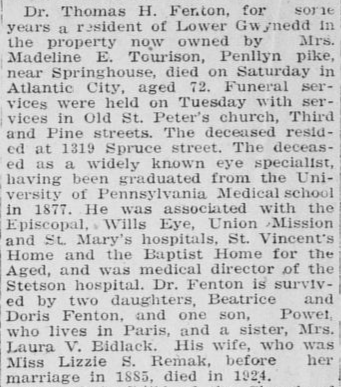
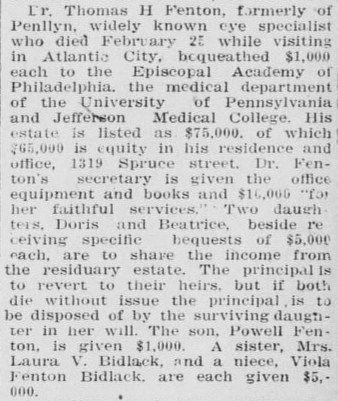
Beatrice Fenton (1887-1983) was born in Philadelphia to Dr. Thomas Hanover Fenton, a prominent ophthalmologist (eye doctor). In the early 1900s, he purchased a summer home in Penllyn while still having a home in Philadelphia on Spruce Street.

Fun Fact # 1: Dr. Thomas H. Fenton became the president of the newly formed American Society of Tropical Medicine and Hygiene (ASTMH) in Philadelphia.
Fun Fact # 2: American painter Thomas Eakins was a family friend to the Fentons.

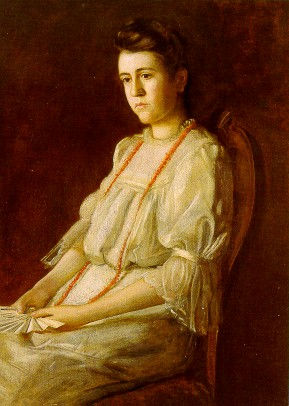
Meanwhile, Beatrice studied four years at the Pennsylvania Academy of Fine Arts where she was mentored by Philadelphia sculptor Charles Grafly. By 1912, she was awarded the Edmund Stewardson price for $100.
After she graduated she established a studio at her place on Cherry Street in Philadelphia. According to the Ambler Gazette archives, she frequently visited friends in Baltimore, Maryland, one of them particularly Marjorie Martinet.


Career
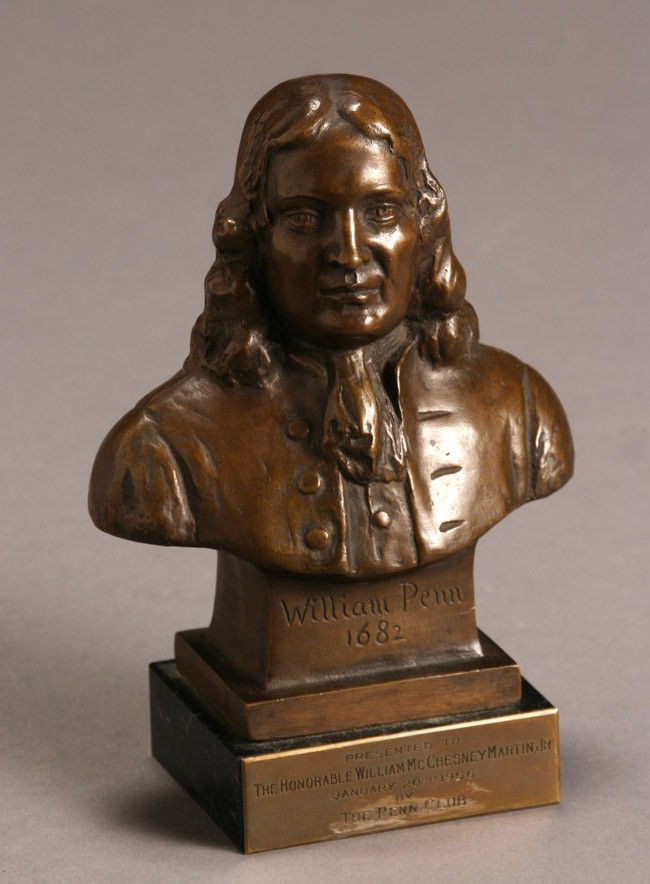

In the early 1930s, Beatrice was commissioned by the Penn Club to sculpt a life-size bust of William Penn in celebration of 250 years since his arrival to the New World. The only picture she had of William Penn was at the Historical Society of Pennsylvania with him dressed in armor.
The bust is currently at the Historical Society of Pennsylvania.
"What I shall try to do is to make the bust alive and convincing, so that when you look at my representation of Penn he shall seem like a person whom you know. This is the only contribution a sculptor can make when the man is not living. With the few materials that I have I shall have to get behind the facts and interpret what Penn did and what he was."
- Beatrice Fenton (1931)
Before the William Penn commission, she sculpted the "Seaweed Fountain" in Fairmount Park Horticultural Center. It continues to be admired by everyone who travels around the city.
"A half century later, curator of 20th century art at the Philadelphia Museum of Art Anne d’Harnoncourt described Seaweed Fountain as Fenton’s first 'ambitious, life-size ornamental sculpture' an example of a genre known as Decorative Realism. An 'unidealized treatment of youth,' it represented a 'departure from standard academic canons of grace and proportion in the human figure.'"
- Ken Finkel, "Realism at the Sesquicentennial: The Palace of Arts"
Fun Fact # 3: Her Seaweed Fountain sculpture was featured at the 1926 Sesquicentennial Exposition. It was the statue that greeted everyone at the Palace of Fine Arts in Philadelphia.

Beatrice was one of the members of the Philadelphia Ten, an all-women group of artists who formed in 1917 to promote and exhibit their work.
Other works she did:
Profile Portrait Relief Bronze Plaque of John White Mathews Jr (1923)
Bust of her father, Thomas H. Fenton (1928)
Starfish Fountain (1928)
Young Bacchus (1930)
Bacchanale (1934)
Pan with Sundial on Woodland Walk on the University of Pennsylvania campus (1938)
Shoe-bill Stork (1942)
Wattled Crane (1943)
Evelyn Taylor Price memorial sundial in Rittenhouse Square (1947)
Plaster Sculpture of Isadora Duncan (unknown)
A bronze memorial tablet to Charles M. Schmitz at the Academy of Music (unknown)


Bibliography
"Art Display." Ambler Gazette. November 25, 1937. Page 3. https://digitalarchives.powerlibrary.org/papd/islandora/object/papd%3Awivp-gazett_23499.
Crimmins, Peter. "Historical Society spotlights a century of Philly public art by women." WHYY. Last modified February 6, 2024. https://whyy.org/articles/women-artists-philly-public-art-historical-society/.
"Dr. Thomas H. Fenton." The Delaware Art Museum. Accessed July 1, 2026. https://emuseum.delart.org/objects/3315/dr-thomas-h-fenton.
Finkel, Ken. "Realism at the Sesquicentennial: The Palace of Arts." PhillyHistory Blog. May 16, 2019. https://blog.phillyhistory.org/index.php/2019/05/realism-at-the-sesquicentennial-the-palace-of-arts/.
"Lower Gwynedd Girl Earns Fame." Ambler Gazette. February 19, 1931. Page 6. https://digitalarchives.powerlibrary.org/papd/islandora/object/papd%3Awivp-gazett_20084.
"Seaweed Girl Fountain (1920)." Association for Public Art. Accessed July 1, 2026. https://www.associationforpublicart.org/artwork/seaweed-girl-fountain/.
Talbott, Page. "Philadelphia Ten." The Encyclopedia of Greater Philadelphia. Accessed July 1, 2026. https://philadelphiaencyclopedia.org/essays/philadelphia-ten/.


Comments